Constraints
 TL;DR - Specify expression / function that must be true, else exception
Constraints declare an expression (lambda) or function that must be true for a transaction to complete. You also provide a message that is returned in the exception that is raised if the expression is not true.
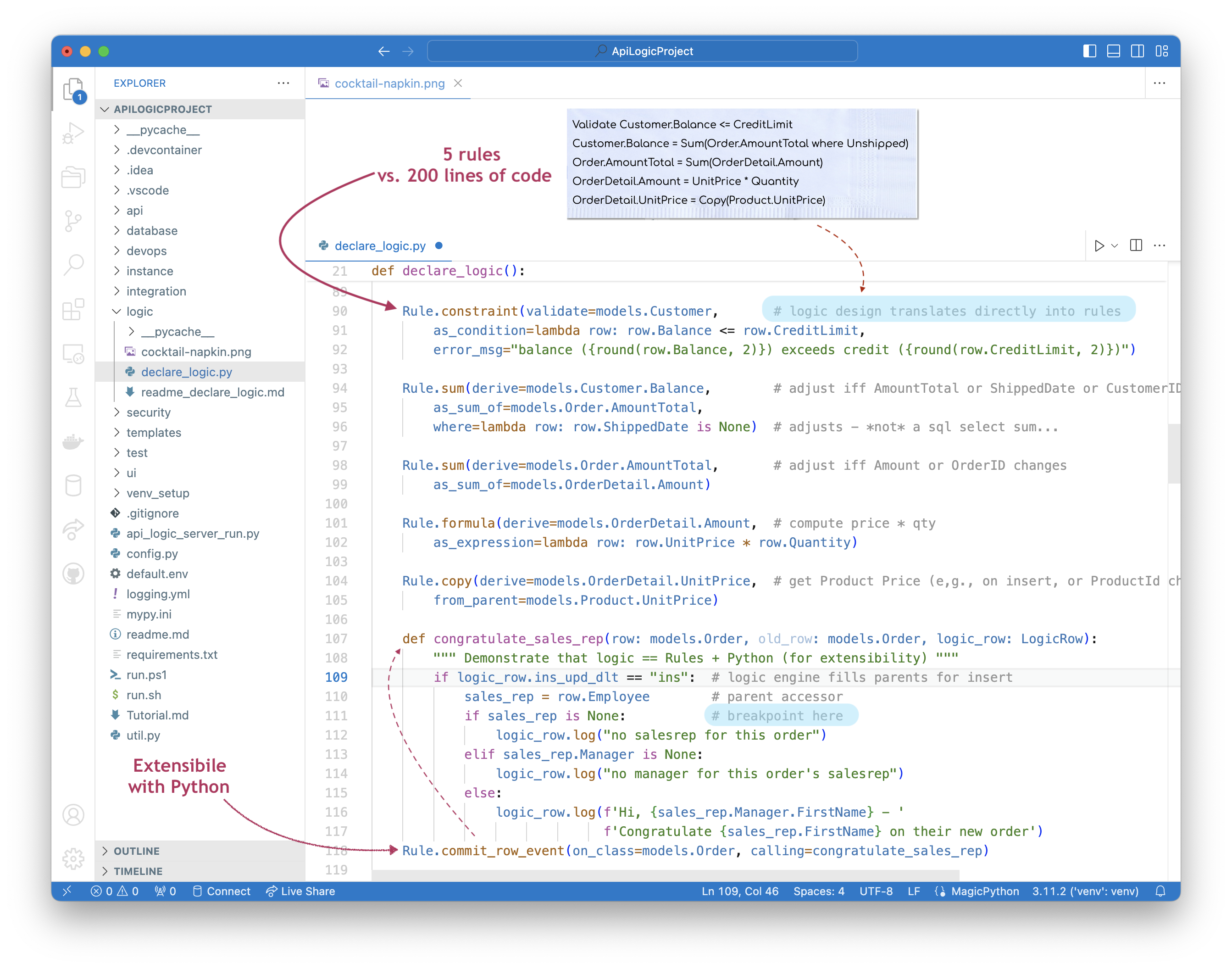
Provide expression as lambda
The simplest contraint is shown below. The first rule is a constraint using a lambda. Note the argument is the row, providing access to the attributes.
You can stop in the debuggers and examine values when the lambda is invoked.
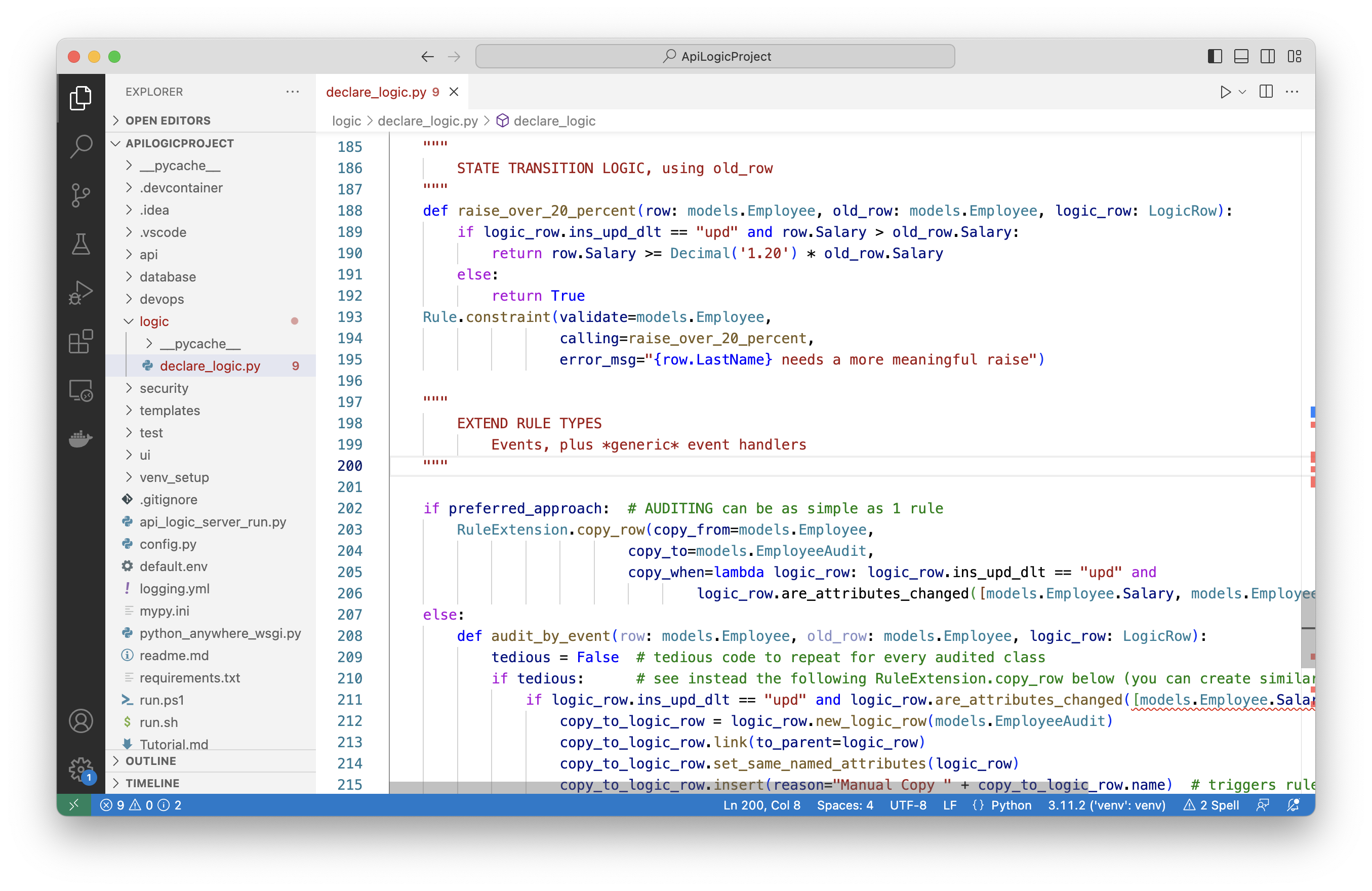
Provide function - old_row, verb
For more complex cases, you can provide a function. Note the arguments include old_row and logic_row. The latter provides access to the verb, so you can make your logic apply only to the desired verbs.
Commit constraints - aggregate values
If your constraint needs to reference a derived sum or count that isn't final until sibling rows in the same transaction have been processed (e.g., a min-cardinality check like "Order must have at least one Item"), note these values are not yet final when the row is initially processed. Address such situations using Commit Constraints.